The Craft Brewing Movement
Absorption into New Age
While the Craft Brewing Movement emerged as a rebellion against corporate capitalism, the standardization and homogeneity of beer, and a localized vision of the industry, it evolved within an emerging neoliberal context that praised entrepreneurialism, individuality, and turning hobbies into profitable businesses.
Entrepreneurial Leisure
Scholars such as J. Nikol Beckham refer to the nature of the Craft Brewing Movement’s success as “entrepreneurial leisure.” Beckham suggests that while the Craft Brewing Movement emerged in opposition against “big beer,” the narrative has evolved to reflect neoliberal ideals, including the virtuous nature of entrepreneurialism, and turning leisure into productivity. The mythologization of the craft brewer has been adapted to transmit neoliberal ideals,
The literature broadly mythologizes the founding fathers of craft brewing and their heroic risk-taking. “Like many craft brewers before and after him, though, brewing was not Bill Owens’ first or second career choice.” He was left with plenty of time to start brewing after “his first wife, Linda, took their two sons and left him,” and he was able to successfully pivot from his career as a photojournalist to embrace one within the realm of entrepreneurial leisure. His labor then became less ordinary and more so a passion project that became a viable business. His brewing publications and guidance, along with Fred Eckhardt’s, helped cultivate the industry. As a veteran in the post-war era, Eckhardt’s experience in the Marines granted him broad professional and educational opportunities. The G.I. Bill enabled him to attend “any school I want to go to… I took flying lessons, dancing lessons… whatever I wanted, I could get.” His professional and educational expertise catapulted him into networks…
In 1986, Thomas M. Burns Jr. began shifting his career and “went full-time back into servicing brewpubs. But [he was] making no money, so [he] put 20-30 hours a week into [his] law practice. The viability of his career in brewing equipment supplies then depended on his Juris Doctor and the supplemental cases he was able to take in order to make ends meet. While Burns Jr. praised the “romantic quality, [and] a fraternal element in the industry,” he also reflects less inclusive attitudes that coincide with the commodification of the industry. “People are more irrational in microbreweries. There are only 10 genuinely qualified prospects here… (at the Fifth Annual Microbreweries Conference in Chicago in 1988) [others] can barely afford to come.”
Beer vs. Cocktails
Despite being the first female brewmaster, Mellie Pullman explains that she “felt like people thought it was really weird that there was a woman brewer. And then I’d feel like I don’t have this commanding authority here.” Despite the Craft Brewing Movement emerging as a progressive and collaborative alternative to “big beer” sociologists have continued to study the phenomenon of epistemic injustice well into the 21st century. In Inka Kosonen, Sarah Barnard & Daniel Sage’s “Craft Beer Lacks Space for Women as Beer Professionals,” it is evident that women’s expertise in the industry has been responded to with mansplaining, ignorance and gender stereotyping… suppress[ing] women’s authority as knowers.”
“Rather than suggesting that the beer space is discriminative and problematic… [Inka Kosonen, Sarah Barnard & Daniel Sage] propose that there is a lack of space for women and minorities in beer.” Rather than demonizing the industry, various theories and arguments seek to explain this tendency. In “Beer and Racism: How Beer Became White, Why It Matters, and the Movements to Change It,” Nathaniel G Chapman and David L Brunsma argue that white supremacy has structured all institutions in American society, and trace its roots back to the tavern in colonial America. More pertinent to the Craft Beer Movement, however, is Wesley Shumar, Tyson Mitman’s argument that “many of the early brewers… [in the movement] had to put together money through loans from friends, lines of credit, and knowledge of cheap equipment and property. While this indeed was a struggle for many craft brewers, it still showed that they had both economic and cultural capital to draw on to get an entrepreneurial enterprise going. And that access was part of their white privilege, even as it felt less like a privilege and more like a struggle.”
The emerging homogenic nature of the Craft Brewing Movement and the prevailing industry was largely dictated by the neoliberal reorganization of American economic systems, privileging those who wielded the cultural, economic, and social capital.
Still, Black brewers and entrepreneurs were celebrated during the Craft Beer Movement, but their success further reveals segregated market structures. In 1984, Black Americans consumed 80 percent of the malt liquor produced in the United States and Nathaniel G. Chapman and David L. Brunsma explain that racially targeted marketing “sold “cheaper products of lesser quality to communities of color.” Though Leon Oldham and Curtis Dilworth successfully established “Big Man” malt liquor in Georgia and were touted as “Brewery entrepreneurs.”
Pullman was the “only woman engineer in her class” and fortunately wielded the experience to navigate male-dominated technical spaces. While her competence was often negotiated in the industry, the common denominator remains that technical experience and whiteness …
~7500 BCE — Archaeological evidence suggests domestication of chiles begins in Mexico, making them one of the oldest cultivated crops in the Americas.
~3000 BCE — Chiles become integrated into Mesoamerican agriculture alongside maize, beans, and squash.
~1400 CE — By the height of the Aztec Empire, chiles are essential to cuisine, medicine, and trade. Multiple varieties are cultivated for different purposes.
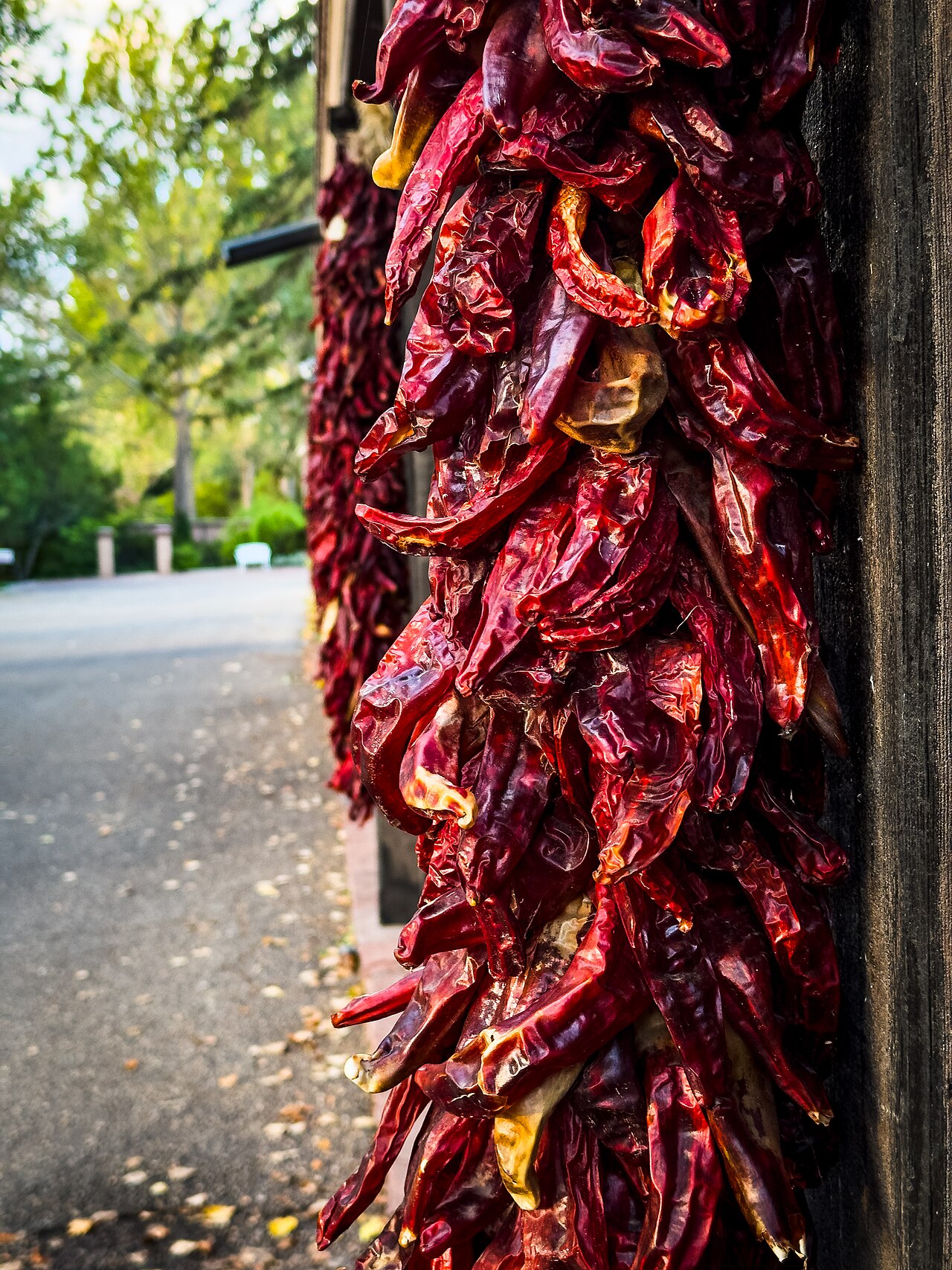
Archaeological evidence suggests chile domestication began around 7500 BCE in Mexico—making it one of the oldest cultivated crops in the Americas.
Colonial Era (1492 – 1800)
1492 — Columbus encounters chiles in the Caribbean and mistakenly calls them “peppers,” confusing them with black pepper.
1493 — Chiles arrive in Spain, beginning their global spread.
1598 — Spanish colonists bring cultivated chile varieties to New Mexico along the Camino Real.
1600s–1700s — Chiles spread through Africa, Asia, and Europe, transforming cuisines worldwide.
Modern Era (1800 – Present)
1912 — Wilbur Scoville develops the Scoville Scale to measure chile heat.
1912 — New Mexico becomes a state; chile culture becomes a marker of regional identity.
1970s–1980s — The Hatch Chile Festival begins, cementing New Mexico’s reputation as the chile capital of America.
2000s — Heirloom chile preservation movements gain momentum as industrial agriculture threatens genetic diversity.
Present — Climate change challenges traditional growing regions while new varieties and cultivation techniques continue to evolve.
The story of the chile is still being written.